Vessel movement predictions you can act on
Region-specific AI that learns how vessels navigate, delivering accurate vessel movement predictions
Problem
Vessel movement is hard to predict accurately
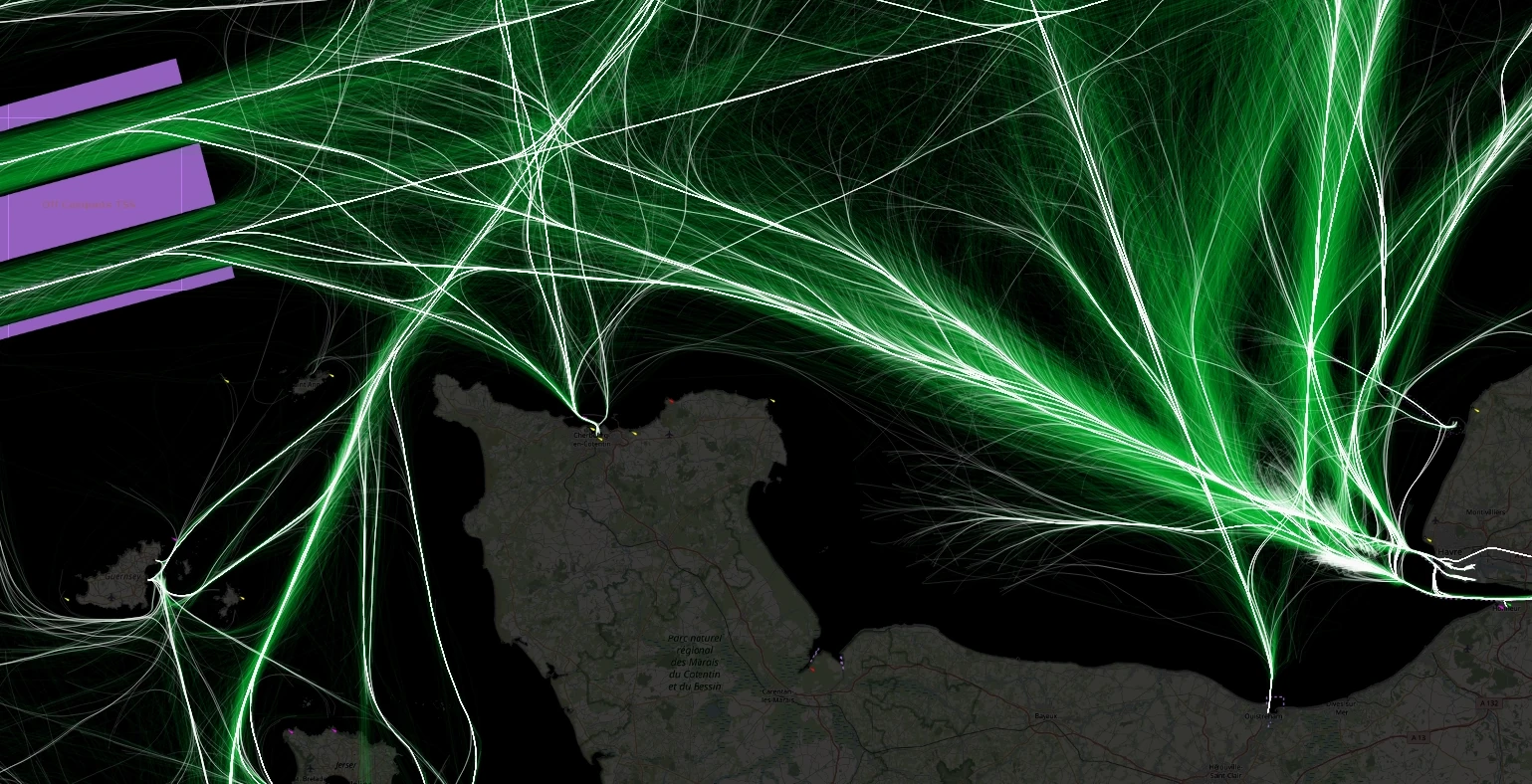
Vessels don't move in straight lines. Routes bend around traffic, tides, and local practice.
That behaviour varies significantly between vessel types and from one waterway to the next,
shaped by norms and constraints that aren't visible on a chart alone, or are hidden in data.
Yet a great deal depends on getting vessel movement predictions right.
Solution
Predictions grounded in regional behaviour
We build AI models that learn how vessels move in specific waterways from AIS
data. These models are specialised not only by vessel type and operational context,
but by waterway, ensuring predictions are finely tuned to the reality of how vessels move
in an area.
This approach allows us to provide the most accurate
predictions of vessel movement within an area.
AIS-Driven Learning
Real vessel behaviour, across vessel types and operating contexts, learned directly from carefully processed AIS data.
Regional Intelligence
Traffic patterns, navigational constraints, and local operating practices captured at a level of detail that other models can't achieve.
Continuously Updated
Rapidly retrained and redeployed to stay aligned with changing behaviour and constraints.
Our models predict:
-
Trajectory - the most likely route the vessel will take to the destination.
-
Positions - synthetic AIS positions for the trajectory with time, speed, course, and heading attributes.
-
ETA - the estimated arrival time with confidence bounds.
Required inputs:
-
Vessel characteristics - vessel type, dimensions, and latest speed over ground.
-
Transit information - live or historical vessel position and a destination, supplied as simple coordinates.
Access routes:
Our models are self-contained and easy to integrate, requiring no specialist knowledge or extra infrastructure to get started.
-
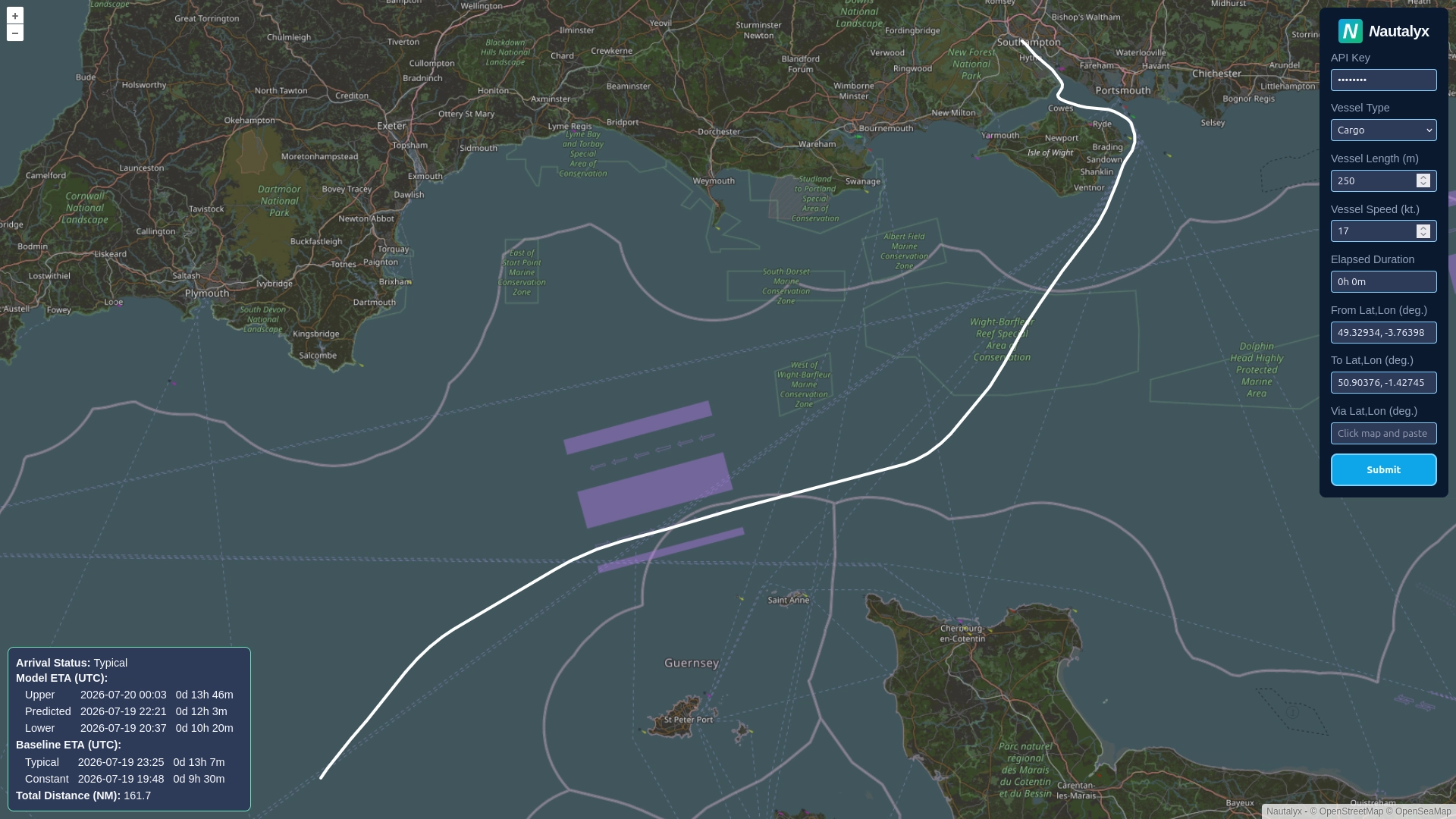
No-code - use the Viewer to generate and visualise individual predictions in your web browser.
-
Low-code - read the API Docs to integrate our production-ready API into existing systems for bulk predictions.
-
Offline - persisted models capture local behaviour for forward deployment on offline edge devices.
Use Cases
Live prediction
Predict the movement of vessels currently in transit using their latest information, which can be freely obtained directly from MarineTraffic.
-
Port operations - continuous predictions during final approach provide the most accurate view of arriving vessels to support the confident planning of tugs, pilots, berths, and other valuable resources.
-
Vessel traffic services - continuous predictions for all vessels moving within an area provide enhanced situational awareness, allowing proactive routing and abnormal behaviour detection when vessels deviate from their expected route.
Replay prediction
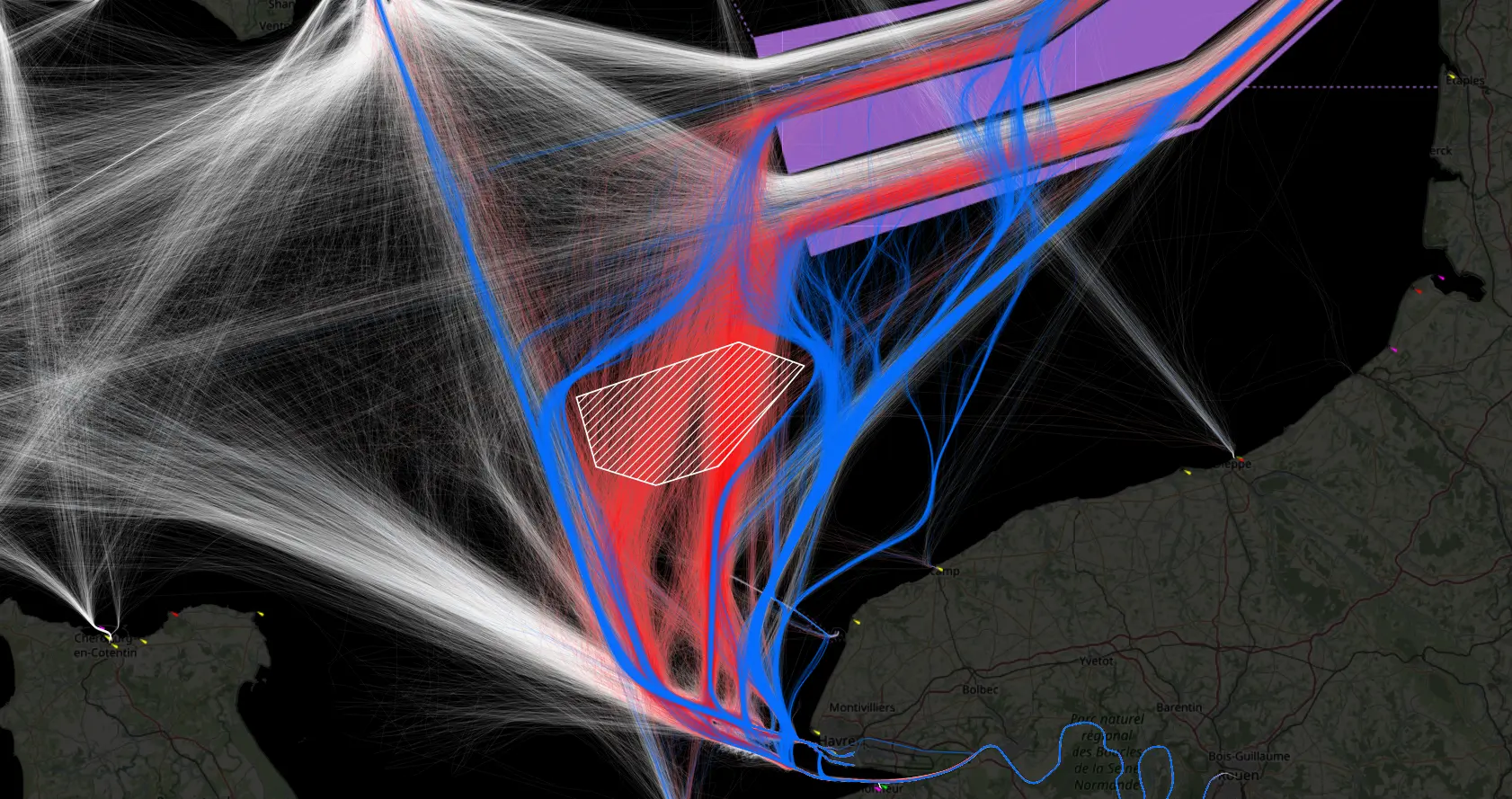
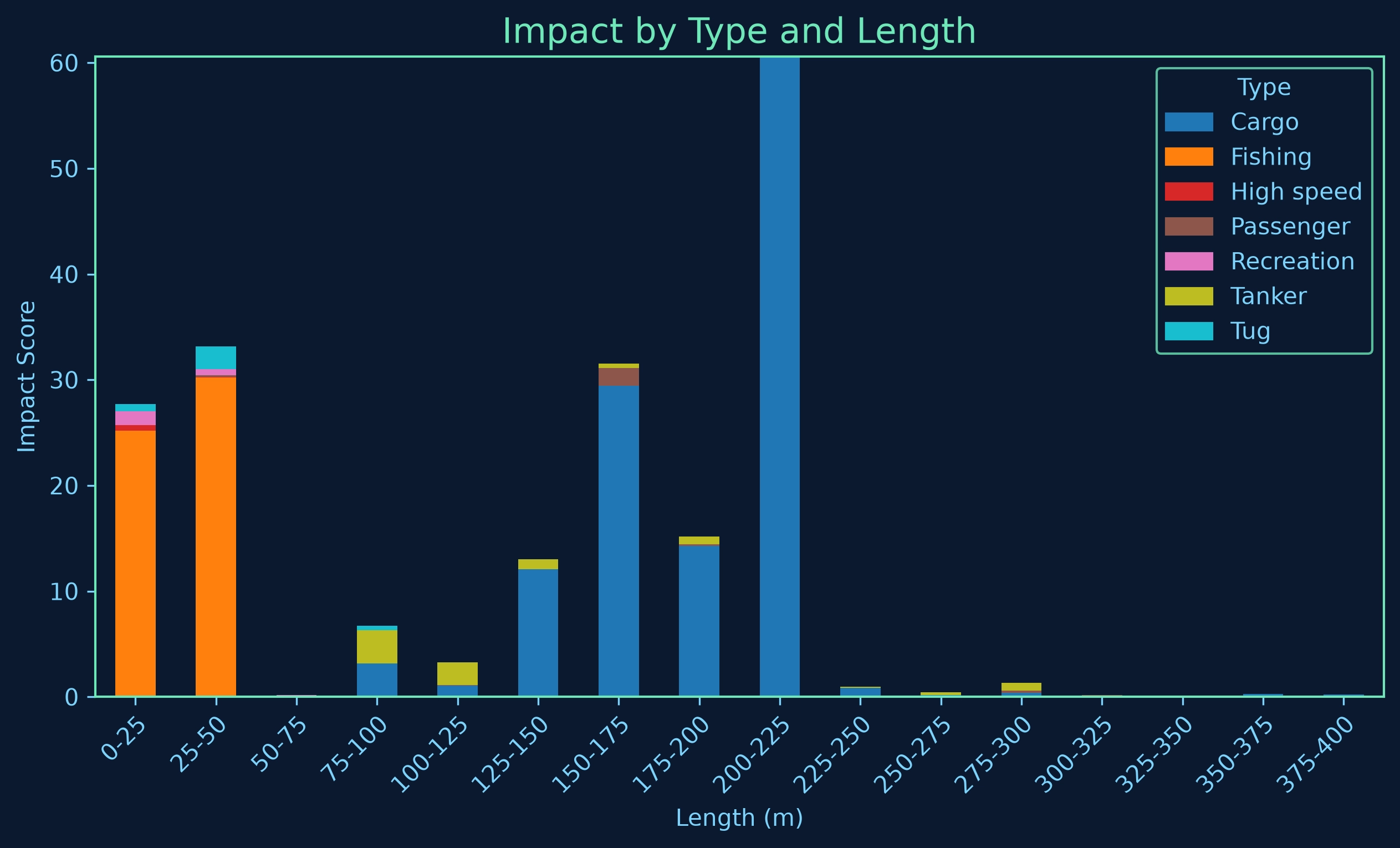
Using historical vessel transit information, predict how each transit would respond to an altered navigational environment. Reveal the impact of a proposed change on individual vessels and routes before it is implemented, captured as a synthetic AIS dataset ready for visualisation and further analysis.
-
Marine spatial planning - predict how vessel traffic could be affected by potential offshore developments. Rapidly test and iterate on potential designs, identifying negative impacts early.
Models
Validated against real transits
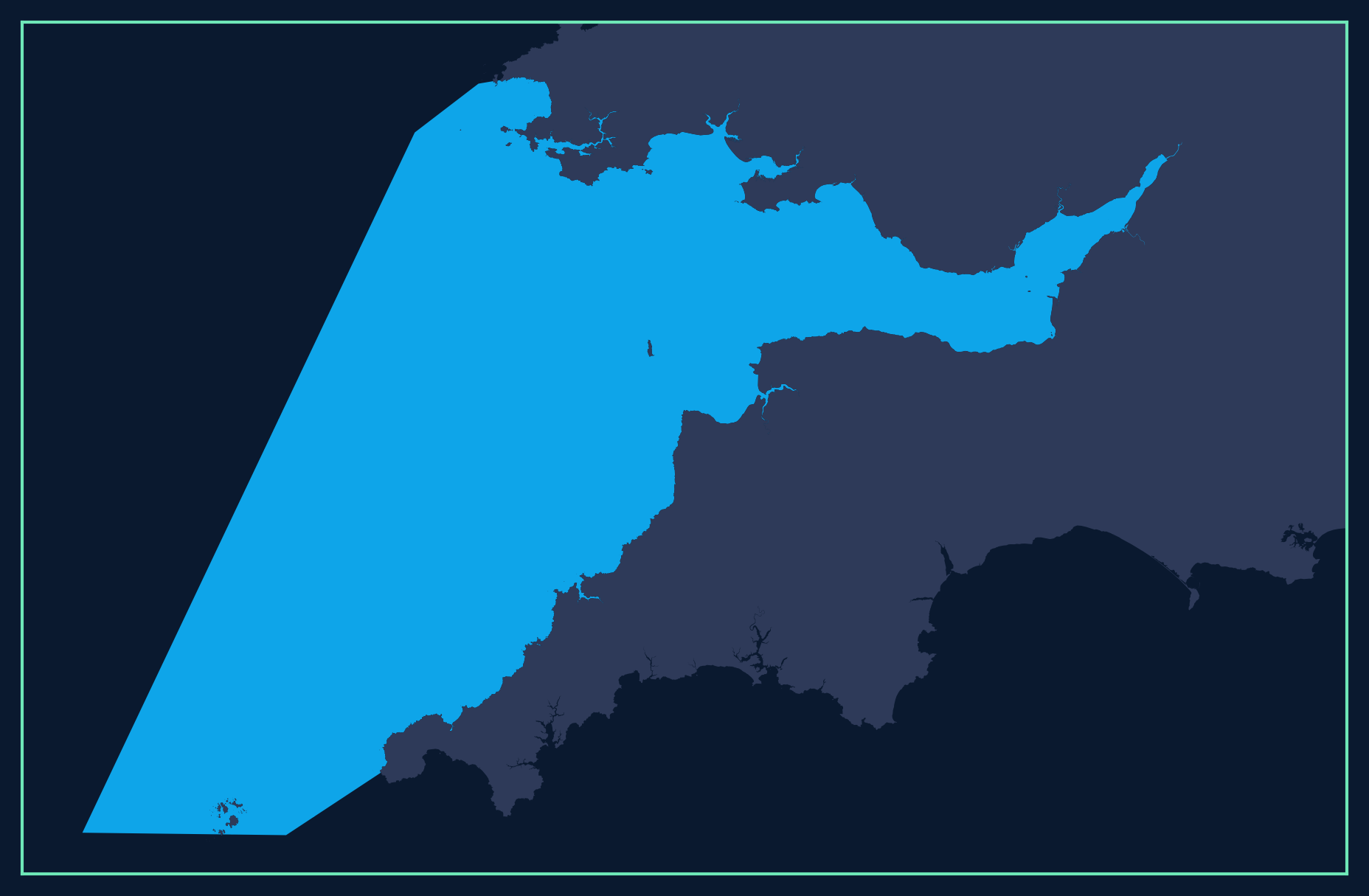
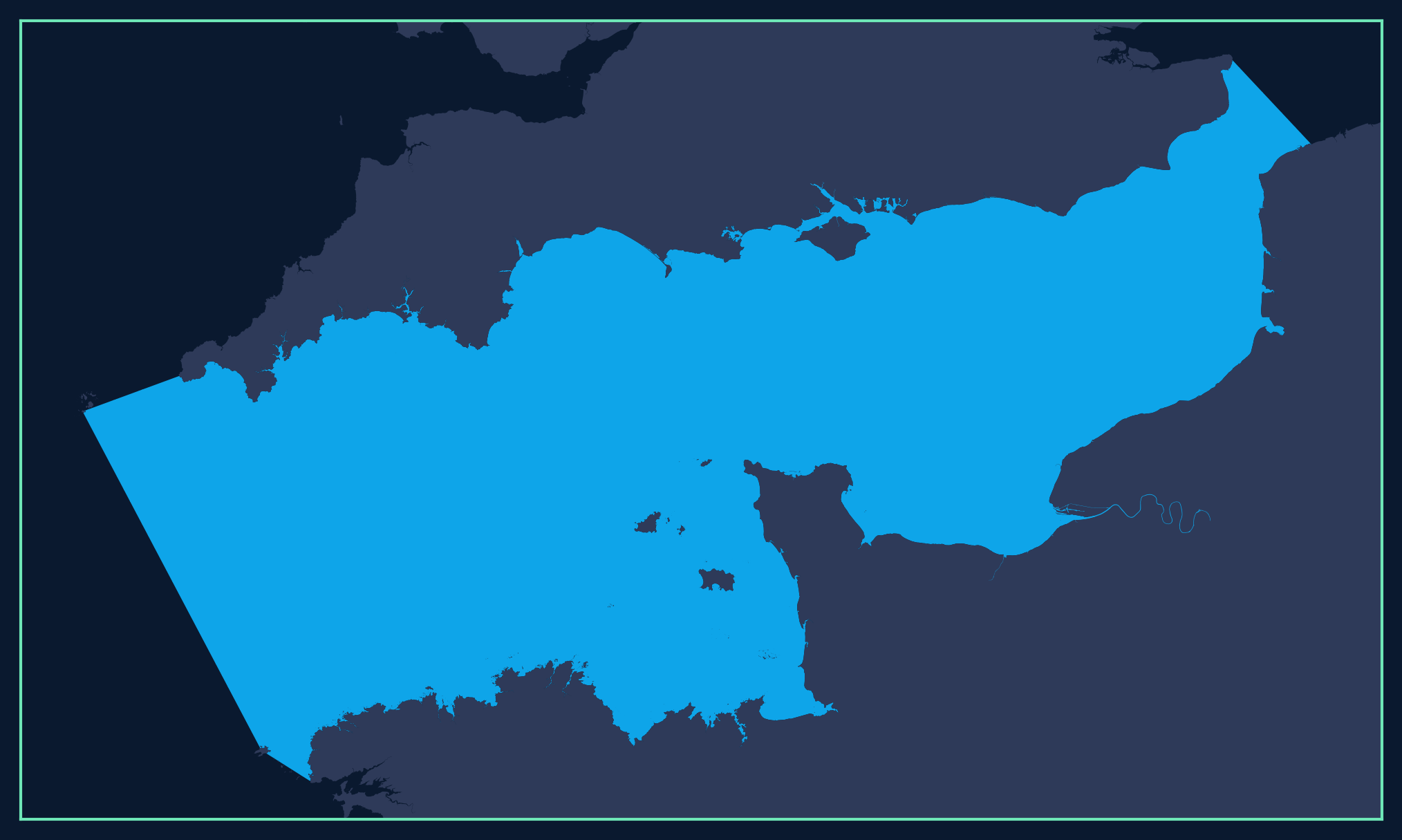
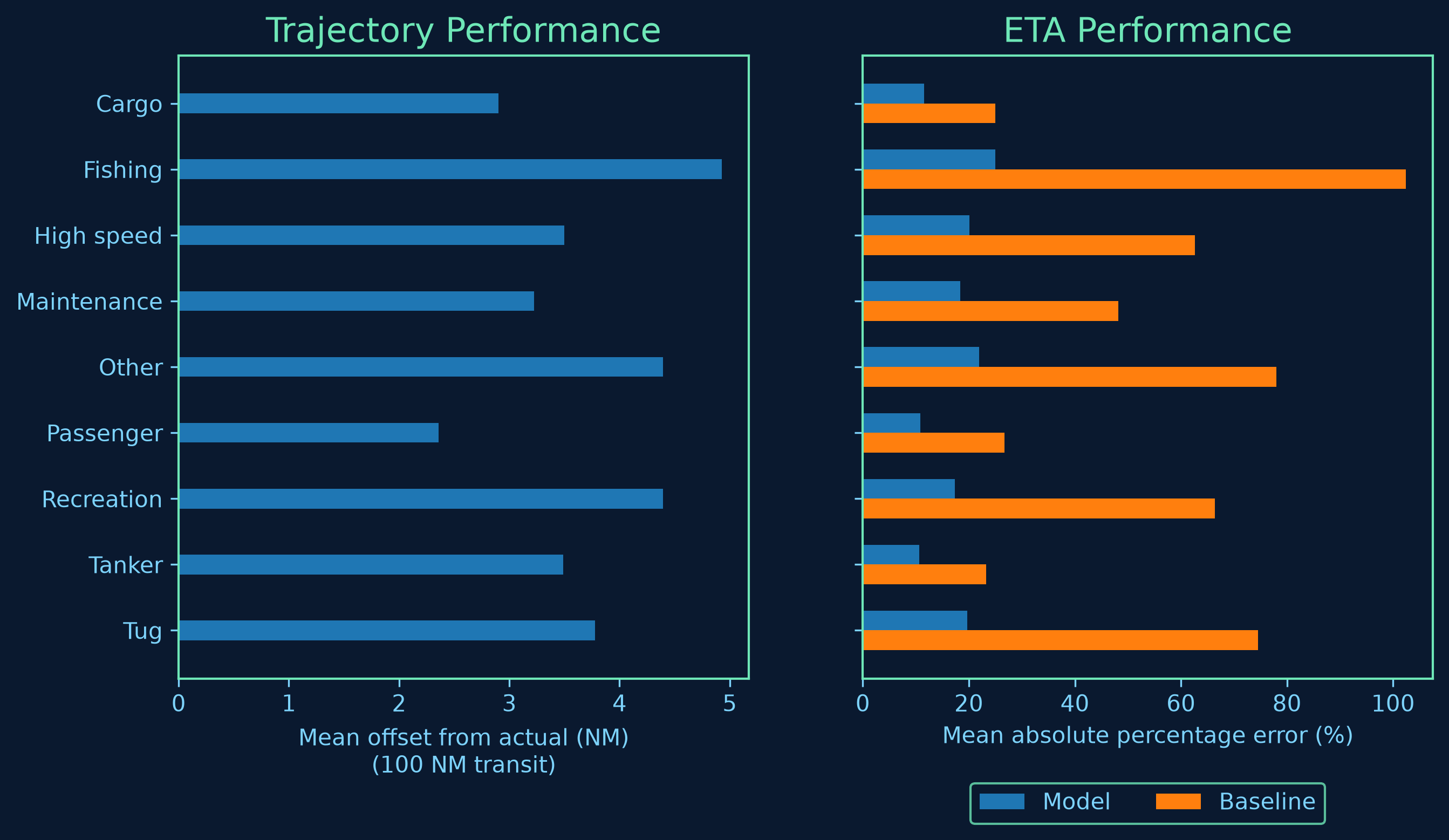
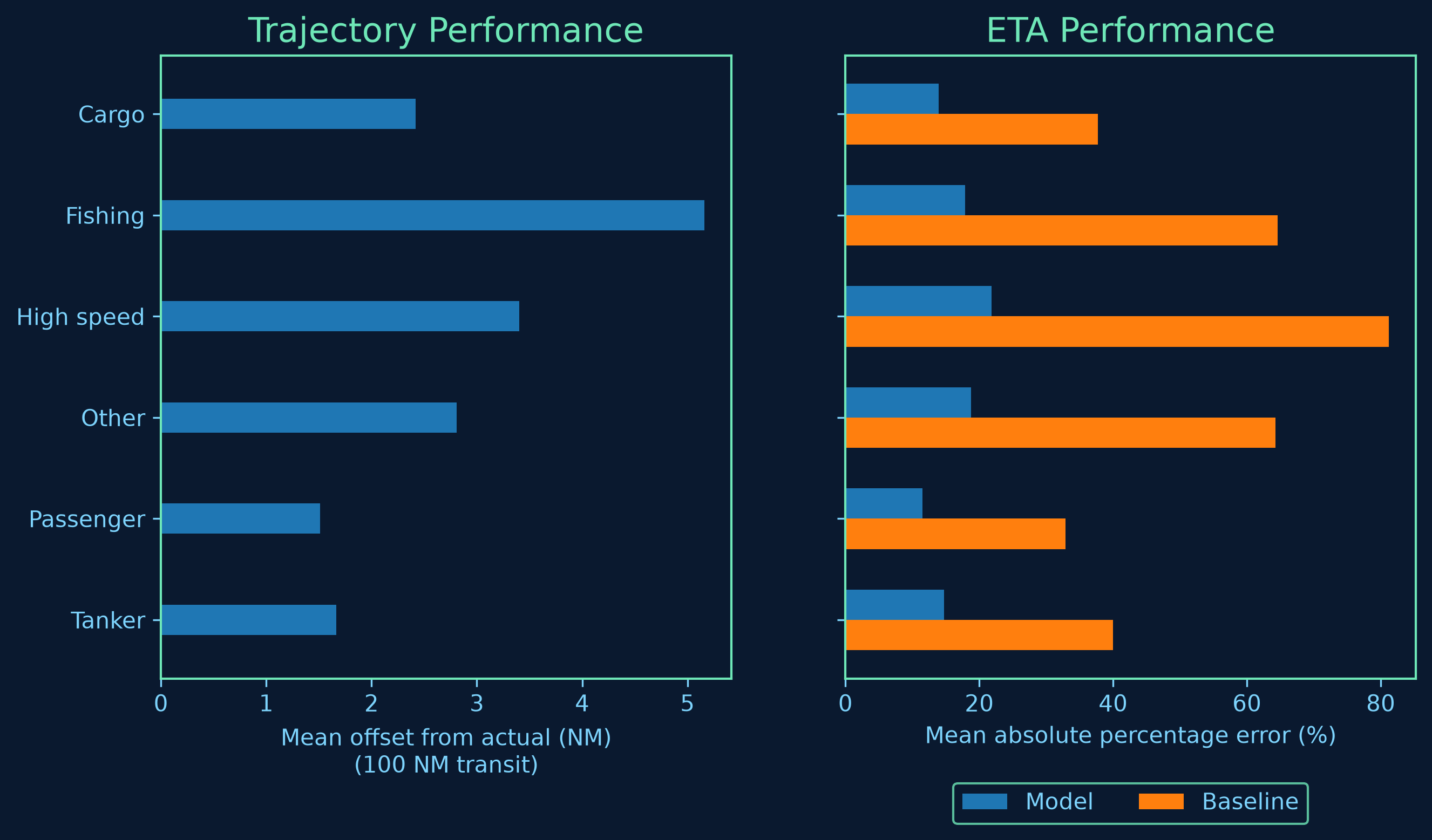
Every model is tested against thousands of real vessel transits before deployment, with
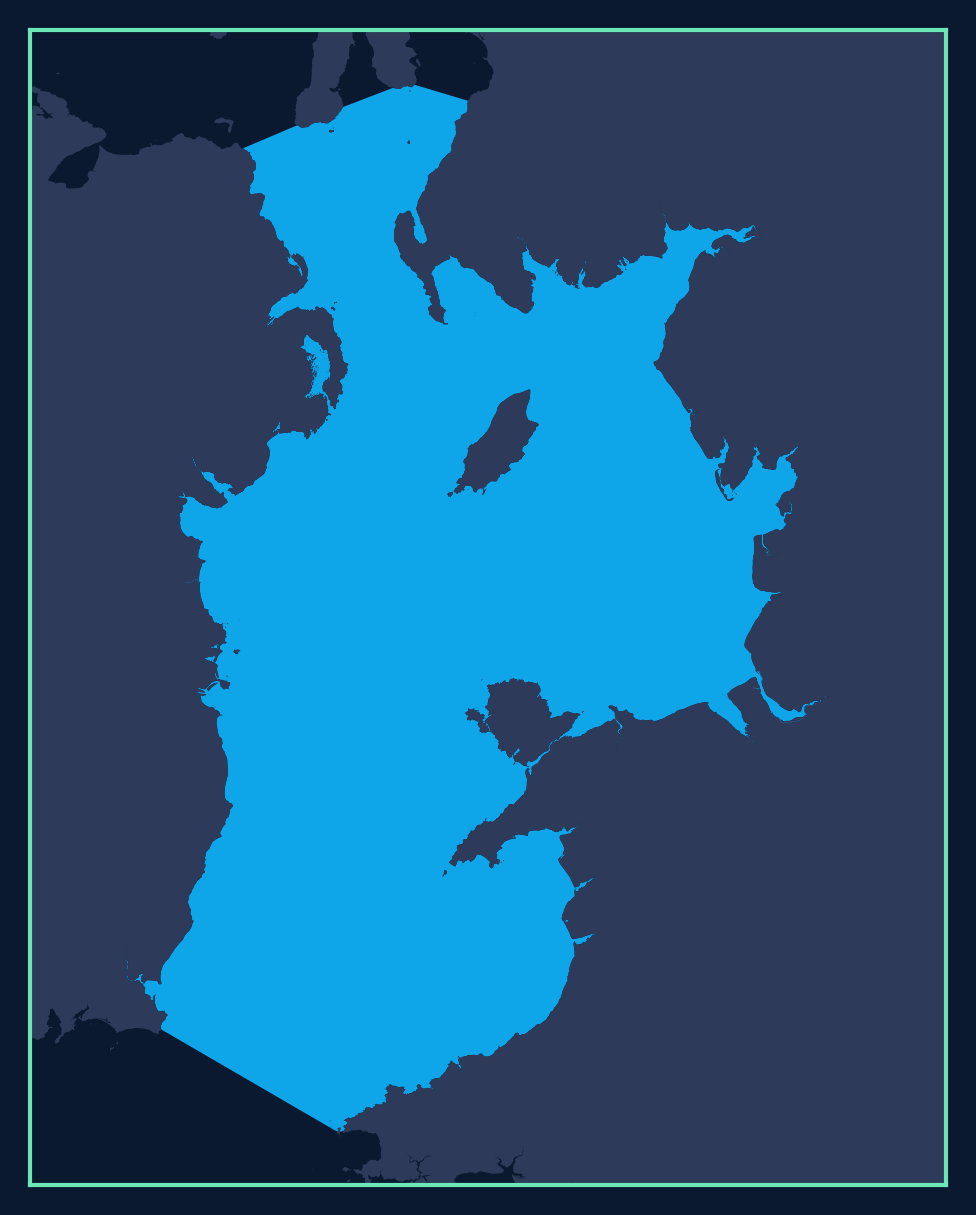
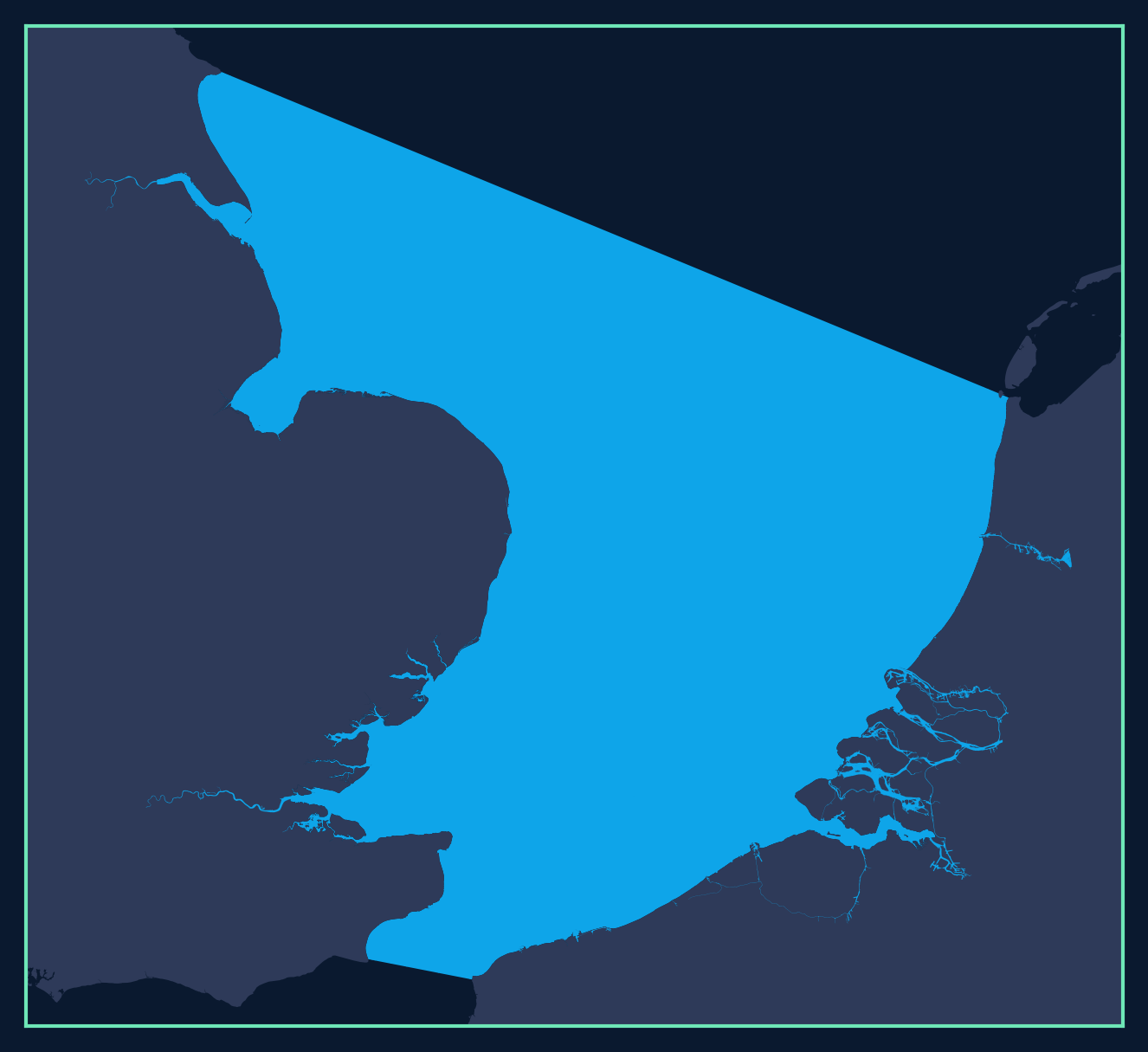
results aggregated across each region for robust, reliable evaluation. Spatial extent and
performance metrics are published for each live model, so you can see exactly where a model
applies and how well it performs before you rely on it.
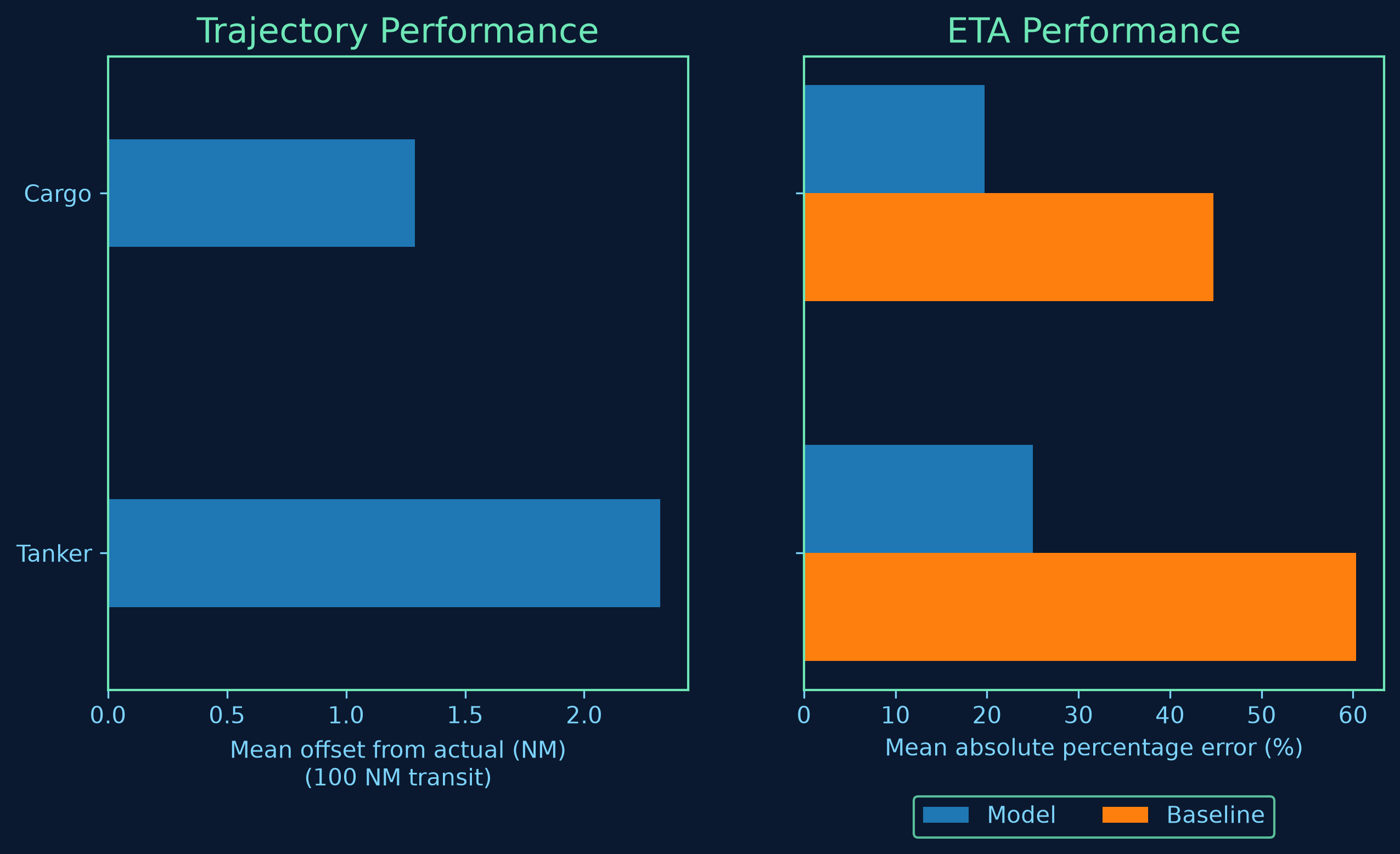
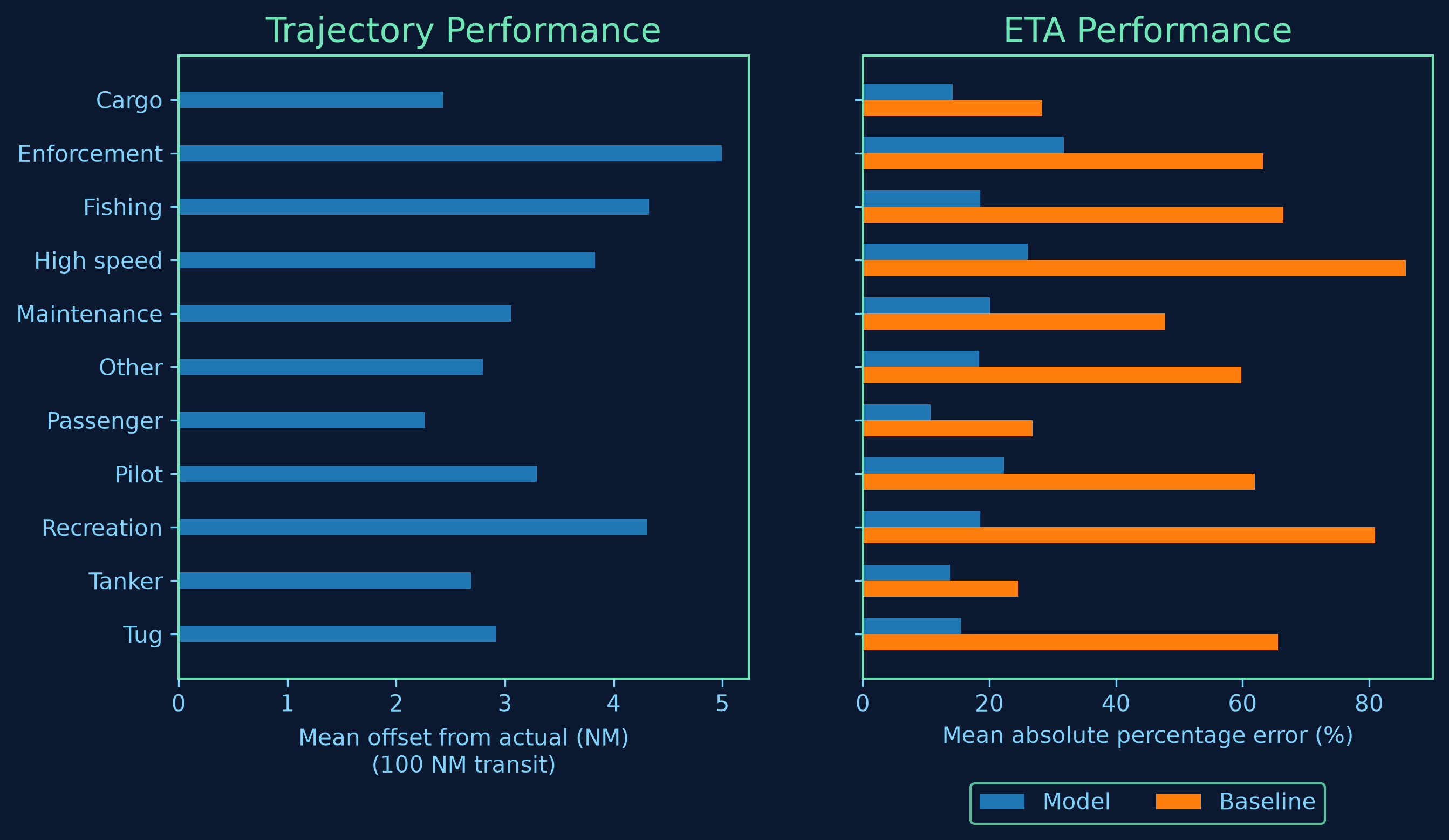
Each model is benchmarked on two tasks:
-
Trajectory reconstruction - how accurately the model recreates open-water vessel transits over significant distances, using only the start and end coordinates of the voyage.
-
ETA prediction - how accurately the model estimates arrival time, benchmarked against a historical baseline for the same transit.